



Families arranging home care often ask: What will the caregiver do around the house? Understanding what is light housekeeping duties are helps set clear expectations from day one — for clients, families, and caregivers alike. At CareSphere, we view a clean, organized home as essential for safety and dignity. Our services are designed to provide this thoughtful, consistent support.
Light housekeeping is a routine, non-medical service that keeps a home tidy, functional, and safe. It covers everyday maintenance tasks, not heavy labor or deep cleaning.
What Light Housekeeping Means in Everyday Care
Light housekeeping involves routine home upkeep that most people can manage independently, but which may be challenging for seniors, individuals with disabilities, or those recovering from illness or surgery. In home care, these are the recurring tasks caregivers complete during scheduled visits.
The goal is a home that is clean, organized, and safe—reducing confusion and preventing hazards such as falls, mold, or pests. Consistent assistance preserves hygiene and helps clients maintain control over their environment.
Light housekeeping in everyday care is similar to what a helpful family member would do during a visit, rather than the work of a professional cleaning crew.
Common Tasks Considered Light Housekeeping
Caregivers perform light housekeeping tasks based on the client’s needs and schedule. These tasks fall into two main categories.
Cleaning and Tidying Tasks
The cleaning aspect of light housekeeping covers surfaces, floors, and living areas. Common tasks include:
- Wiping down kitchen counters, tables, and appliances
- Washing dishes or loading and unloading the dishwasher
- Vacuuming rugs and sweeping or mopping hard floors
- Cleaning bathrooms, including sinks, toilets, and tub or shower surfaces
- Dusting furniture, shelves, and window sills
- Taking out trash and replacing bin liners
- Tidying living spaces — arranging cushions, organizing clutter, putting items back in place
These tasks maintain tidiness and help reduce dust, bacteria, and allergens that affect health and comfort.
Laundry and Basic Household Chores
The second category includes laundry and basic home maintenance to support daily routines:
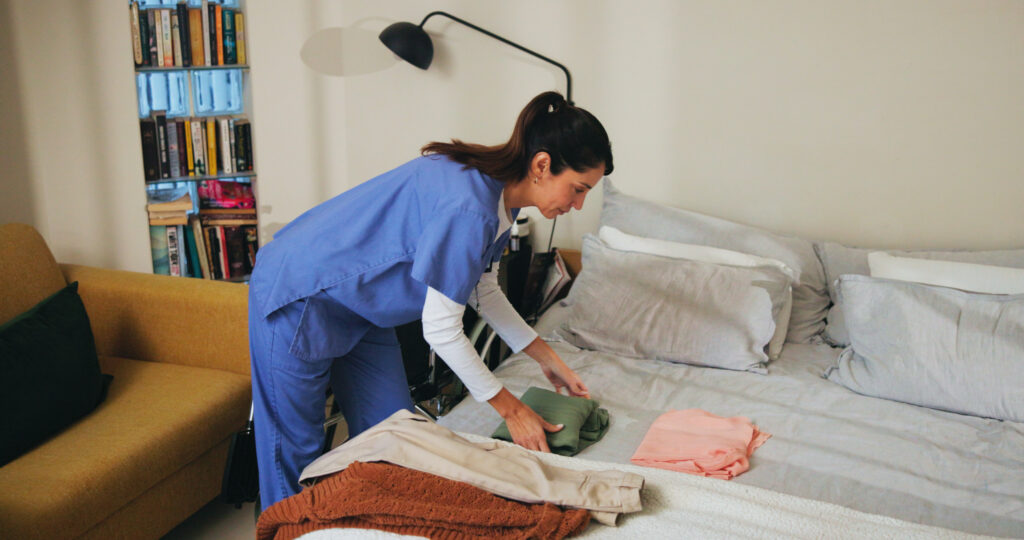
- Sorting, washing, drying, and folding laundry
- Ironing or hanging clothes as needed
- Changing bed linens and making the bed
- Restocking basic household supplies
- Helping with light grocery organization after a shopping trip
These household chores may seem minor in isolation, but for someone with limited mobility or energy, they represent a significant burden. A caregiver who handles them reliably makes a real difference in daily quality of life.
Tasks That Are Not Included in Light Housekeeping
Light housekeeping has clear boundaries, and understanding them protects both clients and caregivers. Tasks that fall outside this scope include:
- Moving or lifting heavy furniture
- Cleaning garages, attics, basements, or outdoor areas
- Washing exterior windows or pressure washing any surface
- Pest control or mold remediation
- Major home repairs or handyman tasks
- Sorting through hoarded or excessively cluttered spaces
- Cleaning up hazardous materials
These exclusions exist because they require specialized training, equipment, or physical effort beyond a caregiver’s role. Assigning these tasks may create safety risks for both caregiver and client.
If a home requires this level of intervention, a professional cleaning or remediation service should be hired separately.
Light Housekeeping vs Deep Cleaning
These terms are often used interchangeably, but they refer to different levels of effort and scope.
| Light Housekeeping | Deep Cleaning | |
| Frequency | Regular (weekly or per visit) | Periodic (monthly, quarterly, or as needed) |
| Focus | Maintenance and tidiness | Intensive, thorough restoration |
| Examples | Wiping counters, sweeping, laundry | Cleaning behind appliances, scrubbing grout, washing walls |
| Who provides it | Home care aides, companions | Professional cleaning companies |
| Physical demand | Light to moderate | Heavy, physically strenuous |
Deep cleaning involves tasks like scrubbing baseboards, cleaning inside ovens, washing walls, and clearing out built-up grime in hard-to-reach areas. It typically requires professional equipment and significantly more time. Light housekeeping, by contrast, is designed to be completed within a normal care visit without disrupting the client’s routine.
Who Usually Provides Light Housekeeping Services
Non-medical home care aides, home health aides (HHAs), companions, or personal care aides typically provide light housekeeping. It is part of a broader set of homemaker services, which also include meal preparation, grocery shopping, and errands.
In Pennsylvania, agencies such as CareSphere match trained, supervised caregivers with clients based on specific needs and schedules. Caregivers receive guidance on expected tasks and how to complete them while respecting client preferences and routines.
Registered nurses, licensed practical nurses, and therapists do not perform light housekeeping. It is a practical, non-skilled support service, which is important to consider when evaluating home care options and coverage.
How Light Housekeeping Supports Independent Living
A clean and organized home supports a person’s ability to live safely and independently. CareSphere prioritizes this across all care programs, including developmental disabilities services.
Consistent routines provide measurable benefits:
- Fall prevention: Clear floors and organized spaces reduce tripping hazards, one of the leading causes of injury among older adults.
- Infection control: Regular cleaning of kitchen and bathroom surfaces limits the spread of bacteria and illness, particularly important for immunocompromised individuals.
- Mental well-being: A tidy environment reduces stress and disorientation, especially for individuals managing memory-related conditions.
- Nutritional support: A clean kitchen encourages better eating habits and safe food preparation.
- Dignity and self-respect: Living in a well-kept space allows clients to feel comfortable having family visits and to maintain a sense of pride in their home.
For many seniors and adults with disabilities, these benefits support the ability to age in place rather than move to a facility before it is necessary.
When Light Housekeeping Is Not Enough
In some situations, routine light housekeeping does not fully address a client’s needs. Identifying these cases early helps families plan effectively.
Signs that more support may be needed include:
- The home has significant clutter, damage, or unsanitary conditions that go beyond tidying
- The client requires physical assistance with bathing, dressing, or moving around the home
- Safety hazards — such as expired food, broken fixtures, or fall risks — have accumulated despite regular cleaning
- The client’s cognitive decline makes household management consistently unsafe or ineffective
- Family caregivers are overwhelmed, and the current care arrangement is unsustainable
In these cases, a broader care plan is needed rather than additional cleaning. Personal care, companion care, or more intensive homemaker support may be required. In Pennsylvania, CareSphere helps families assess needs and develop a care plan that meets all requirements without overpromising or underdelivering.
FAQ
What is considered light housekeeping in a home care setting?
Light housekeeping in home care includes routine tasks such as sweeping, mopping, vacuuming, wiping surfaces, laundry, washing dishes, and tidying living spaces. It does not include heavy cleaning, major repairs, or deep-cleaning projects.
What does light housekeeping mean compared to homemaking services?
Light housekeeping is one part of homemaking services. Homemaking also includes meal preparation, grocery shopping, errands, and other household support. Light housekeeping specifically refers to the cleaning and maintenance portion of these services.
What is light housekeeping for seniors specifically?
For seniors, light housekeeping maintains a safe and comfortable environment through tasks such as vacuuming to prevent falls, cleaning bathrooms to prevent infection, and managing laundry for clean clothing and bedding. The scope is tailored to each individual’s home and care schedule.
Can a caregiver be asked to do tasks outside of light housekeeping?
Light housekeeping has defined boundaries. Caregivers should not be asked to perform heavy lifting, deep cleaning, outdoor work, or tasks that pose physical risk. These requests exceed the standard role of a non-medical home care aide.
Does CareSphere include light housekeeping in its home care plans?
Yes. CareSphere includes light housekeeping in its companion care and homemaker services for clients in Pennsylvania. Caregivers help maintain clean, organized homes as part of a broader plan supporting safety, independence, and comfort. Families in all 67 Pennsylvania counties can access these personalized services.
How often is light housekeeping done during a care visit?
Frequency depends on the client’s care plan and caregiver visit schedule. Some tasks, such as washing dishes or wiping the kitchen, may occur every visit, while others like laundry or changing bed linens may be weekly. The goal is a consistent routine that keeps the home clean and safe between visits.