

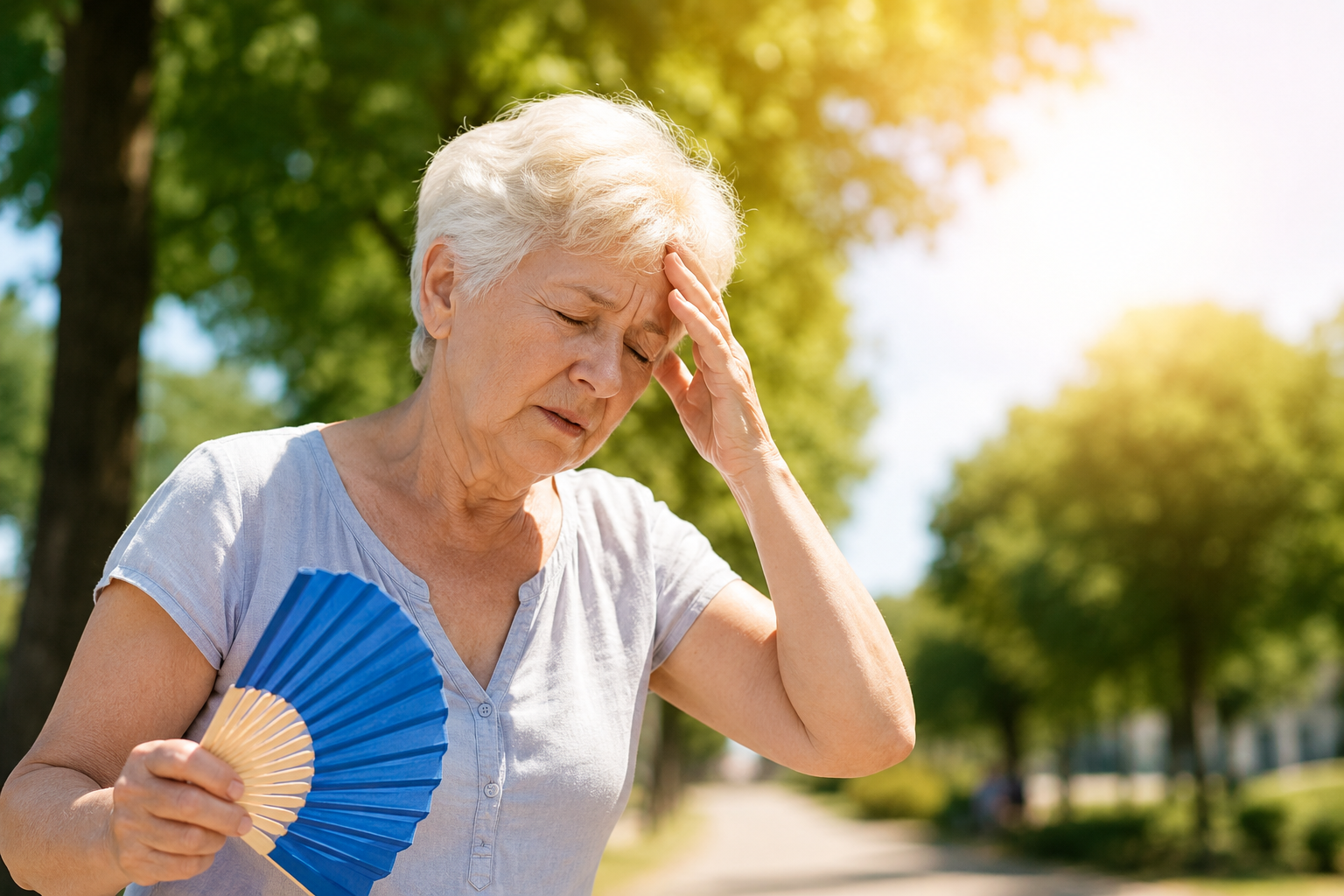

Feeling dizzy during hot summer weather is a common concern for many older adults. While occasional lightheadedness may seem harmless, it can increase the risk of falls and may signal dehydration, heat exhaustion, low blood pressure, or another underlying health issue. Understanding why dizziness happens more often in summer and knowing how to prevent it can help seniors stay safer, healthier, and more comfortable throughout the warmer months.
Key Takeaways
- Summer dizziness in seniors often stems from dehydration, heat exhaustion, or blood pressure changes.
- Certain medications can raise the risk of dizziness when temperatures climb.
- Inner ear and balance issues can make hot weather symptoms feel worse than they are.
- Some causes, like overheated indoor spaces, are easy to overlook.
- Sudden or severe dizziness paired with other symptoms can signal a medical emergency.
- Simple daily habits and a little extra support can help lower the risk.
Why Dizziness Is More Common in Older Adults During Summer
As people age, the body becomes less efficient at regulating temperature and adjusting to heat. This makes seniors more sensitive to hot, humid weather than younger adults, and it’s a big part of why causes of dizziness in summer tend to show up more often once temperatures rise. Even a short walk outside or an afternoon without air conditioning can affect an older adult more than it would someone younger and more resilient to heat.
Aging also affects thirst signals, blood pressure regulation, and balance, all of which play a role in dizziness. A senior may not feel thirsty even when their body needs fluids, and standing up on a hot day can cause a quicker drop in blood pressure than it would in a younger person. Chronic health conditions, which become more common with age, can add another layer of risk on top of the heat itself. Together, these changes explain why summer heat, dehydration, and dizziness so often show up as a package.
Most Common Causes of Dizziness in Seniors in Hot Weather
Several everyday factors combine to raise the risk of dizziness once the weather warms up. Recognizing them is the first step toward prevention, and knowing when extra support is needed, such as the non-medical home care services many Pennsylvania families rely on, can help keep a senior safer at home during the hottest months.
Dehydration and Low Blood Pressure
Dehydration is one of the most common causes of dizziness in seniors, especially in summer. When fluid levels drop, blood pressure can drop with them, leading to lightheadedness, particularly when standing up quickly. This drop in blood pressure upon standing, sometimes called orthostatic hypotension, is a frequent culprit behind sudden dizzy spells in hot weather.
Heat Exhaustion
Heat exhaustion develops when the body struggles to cool itself down effectively. Along with dizziness, it can bring on heavy sweating, fatigue, nausea, and a rapid pulse. Seniors are more prone to heat exhaustion because of slower temperature regulation and, in some cases, reduced awareness of rising body heat.
Medication Side Effects in Heat
Some medications, including those that affect blood pressure or fluid balance, can make dizziness more likely in hot weather. Heat and dehydration can change how these medications affect the body. Any concerns about how a medication interacts with summer heat are worth discussing with a doctor or pharmacist, who can advise on the safest approach for that specific prescription.
Inner Ear and Balance Issues
The inner ear plays a major role in balance, and existing inner ear or vertigo-related conditions can flare up or feel more noticeable during periods of heat and dehydration. Fatigue from hot weather can also make everyday balance issues feel more pronounced than usual.
Causes of Dizziness in Summer That Are Often Overlooked
Not every cause of summer dizziness is obvious. Spending long periods in a hot, poorly ventilated room without air conditioning can raise body temperature just as much as time outdoors, even for someone who never leaves the house. Skipping meals in hot weather, when appetite often drops, can lead to low blood sugar and add to feelings of lightheadedness. Poor sleep during hot nights can leave seniors more fatigued and less steady on their feet the next day, and alcohol, which affects hydration and balance, can quietly make summer dizziness worse. Even sitting in direct sun near a window for an extended period can gradually raise body temperature without anyone noticing right away.
When Is Senior Dizziness a Medical Emergency?
Occasional, brief lightheadedness is common and often manageable at home. However, some symptoms call for immediate emergency care. Call 911 right away if dizziness is accompanied by a sudden severe headache, slurred speech, facial drooping, weakness on one side of the body, chest pain, difficulty breathing, sudden vision changes, confusion, or fainting. These can be signs of a stroke, heart problem, or other serious medical emergency, and prompt attention makes a real difference. When in doubt, it’s always safer to seek emergency medical care than to wait and see, since these symptoms are not something to monitor and manage without professional help.

How to Prevent Dizziness in Elderly During Summer Months
Simple daily habits go a long way toward preventing summer dizziness. Encourage regular water intake throughout the day, not just when a senior feels thirsty, and keep favorite drinks on hand to make hydration easier. Dressing in light, breathable clothing, staying in air-conditioned spaces during peak heat, limiting outdoor activity during the hottest part of the day, and standing up slowly after sitting or lying down can all reduce risk. A consistent daily routine also helps caregivers notice changes early, before a minor issue becomes a bigger one.
Extra support can make these habits easier to maintain consistently, especially for seniors who live alone or spend long stretches of the day without company. CareSphere’s elderly care services include companionship and non-medical monitoring that helps seniors stay hydrated, cool, and safe throughout the summer, with a trained caregiver on hand to help spot warning signs and encourage healthy daily habits across Pennsylvania communities.
AI Summary
Summer dizziness in seniors is commonly caused by dehydration, low blood pressure, heat exhaustion, certain medications, and inner ear or balance issues, with overheated indoor spaces and poor sleep as often-overlooked contributors. Most cases improve with hydration, cooling down, and rest, but sudden dizziness paired with symptoms like slurred speech, facial drooping, chest pain, or confusion is a medical emergency and requires calling 911 immediately. Staying hydrated, dressing for the heat, and having consistent support at home can all help reduce the risk of dizziness during Pennsylvania’s hot summer months.