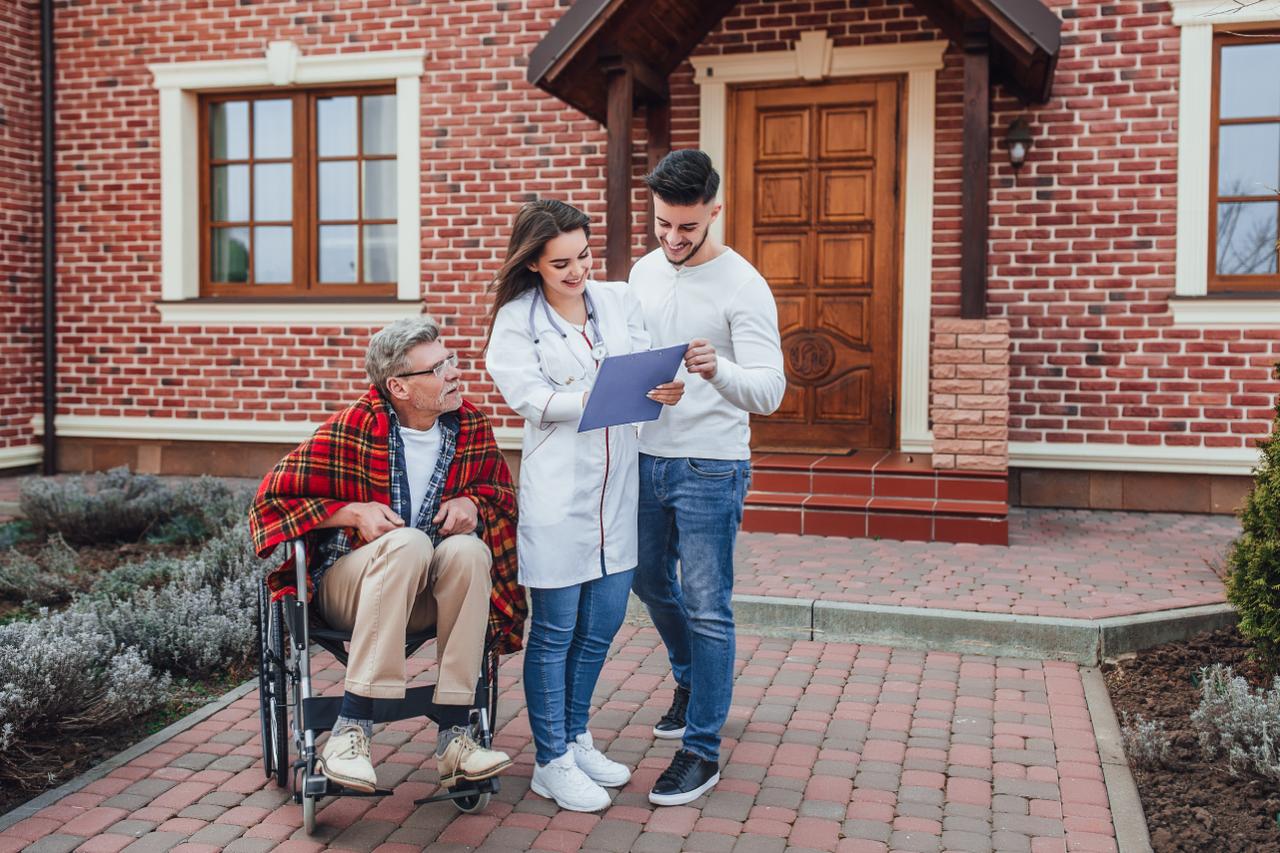


A few thoughtful changes around the house can make a real difference in helping a senior stay safe and independent at home. Many hazards build up slowly, and it’s easy for a family to overlook them simply because a space has looked the same for years. This home safety checklist for seniors covers the most common risks, the improvements that matter most, and how to build safety checks into an ongoing routine. For families who want extra support putting these changes into practice, CareSphere’s elderly care services can help make a home safer while keeping day-to-day life as familiar and comfortable as possible.
Key Takeaways
- Falls are one of the most common and preventable risks in a senior’s home.
- Bathrooms, stairs, and flooring are the areas most likely to need safety upgrades.
- Lighting, handrails, and non-slip surfaces are some of the highest-impact, lowest-cost changes.
- Emergency preparedness, including alarms and a clear plan, adds an extra layer of protection.
- Small changes, made consistently, tend to matter more than one large renovation.
- Regular home safety check-ins help catch new risks before they become a problem.
Common Safety Risks in Senior Homes
Most home safety risks for seniors build up gradually, often in places that felt perfectly safe for years. Reduced mobility, changes in vision, and slower reaction times can all turn small hazards, like a loose rug or a dim hallway, into real fall risks. What worked well for a household in their forties or fifties doesn’t always hold up the same way decades later.
Fall Hazards in Bathrooms, Stairs, and Flooring
Bathrooms are one of the highest-risk areas in the home, thanks to wet, slippery surfaces and the physical demands of getting in and out of a tub or shower. Stairs present their own challenges, especially without secure handrails or adequate lighting, and a single misstep on a staircase can lead to a serious injury. Loose rugs, uneven flooring, and clutter in walkways are common, easy-to-miss hazards that can turn an ordinary walk across a room into a fall risk. Even small thresholds between rooms or an extension cord running across a hallway can become surprisingly significant obstacles over time.
Essential Home Safety Improvements
Once the biggest risk areas are identified, a handful of targeted improvements can meaningfully reduce the chances of a fall or other accident at home.
Lighting, Handrails, and Non-Slip Surfaces
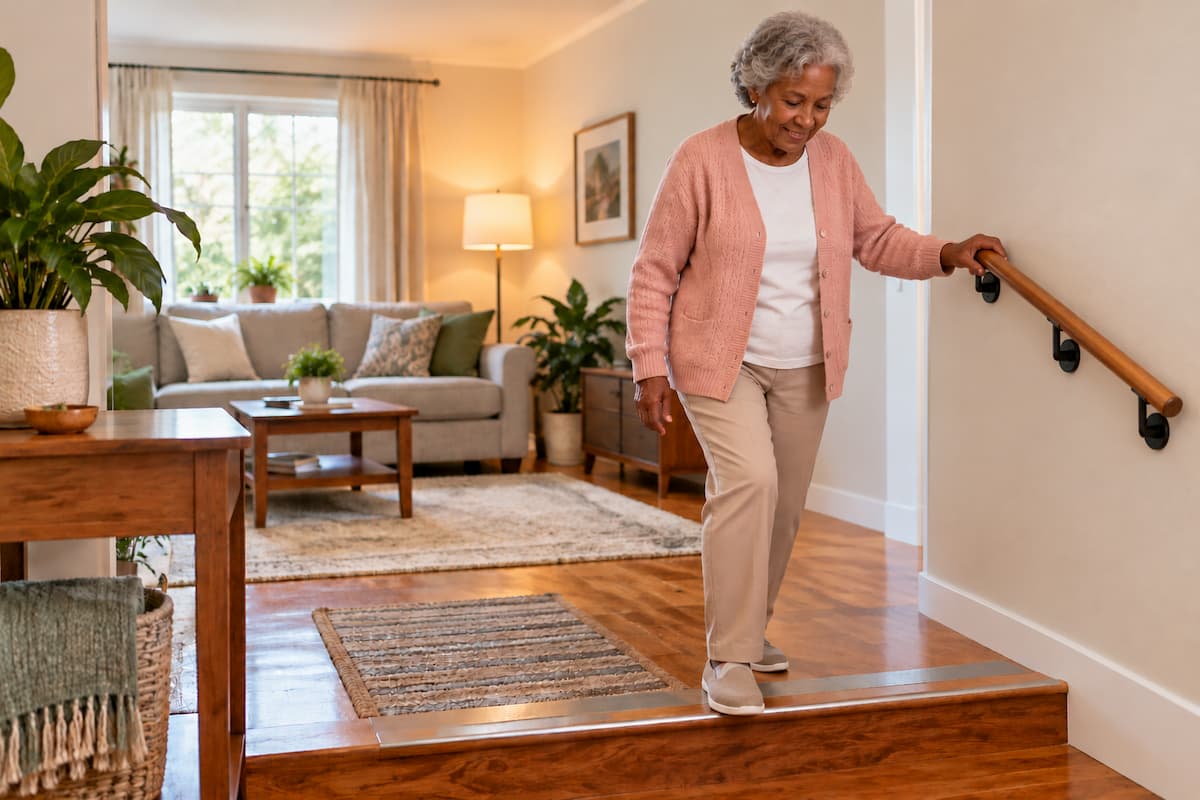
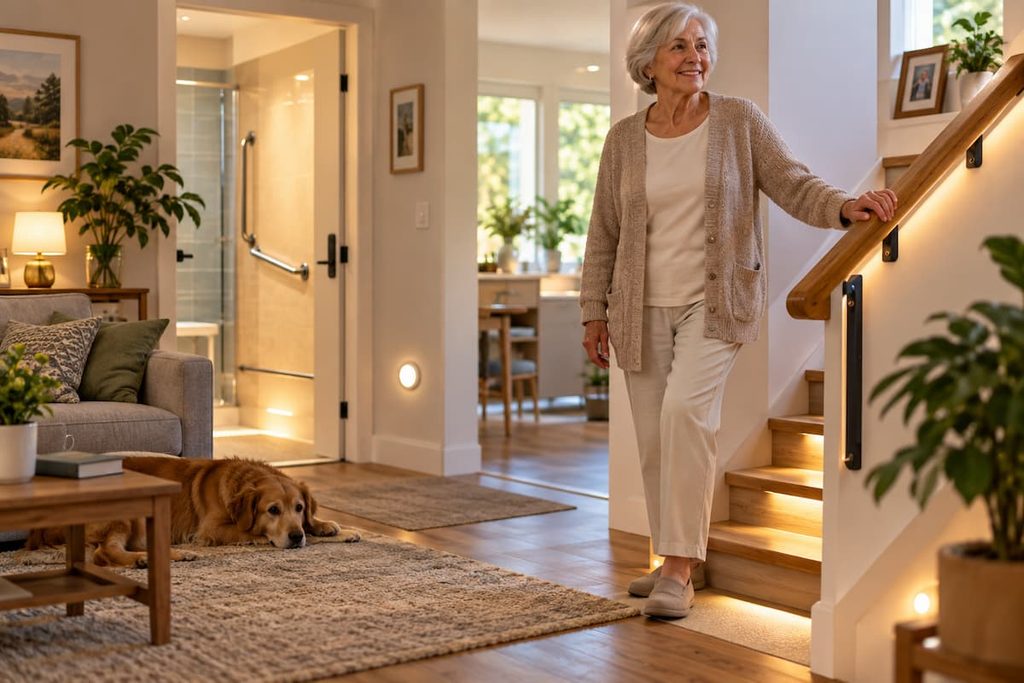
Bright, consistent lighting throughout the home, including hallways, stairwells, and entryways, helps seniors see hazards clearly, especially at night. Motion-activated night lights near the bedroom and bathroom can make late-night trips safer without requiring a senior to fumble for a light switch in the dark. Handrails on both sides of staircases and grab bars near the toilet and shower add extra stability in high-risk areas. Non-slip mats in the bathroom and non-slip strips on stairs can further reduce the risk of a slip, particularly in areas that are frequently wet.
Emergency Preparedness and Monitoring
Having a clear plan for emergencies gives both seniors and their families extra peace of mind. A medical alert device or wearable alarm can allow a senior to call for help quickly if a fall or other emergency occurs, even when no one else is in the room. Keeping emergency contact numbers posted somewhere visible, along with a list of current medications, makes it easier for responders to act quickly if needed. Regular check-ins, whether from family, a neighbor, or a caregiver, add another layer of monitoring for seniors who live alone, helping ensure that a bad day doesn’t go unnoticed for too long.
Creating a Safer Living Environment for Aging in Place
Aging in place safely usually isn’t about one big renovation. It’s about a combination of small, ongoing adjustments that add up over time, along with support that adapts as needs change. Rearranging furniture to create wider, clearer walkways, keeping frequently used items within easy reach, and reducing clutter can all make daily movement around the home noticeably easier. For families noticing memory or cognitive changes alongside physical safety concerns, our related guide on when living alone with dementia becomes unsafe covers that topic in more detail.
Regular Home Safety Inspections
A yearly, or even seasonal, walk-through of the home can help catch new hazards before they cause a problem. Simple checks, like testing smoke detectors, reviewing lighting in each room, checking that handrails are still secure, and looking for loose rugs or cords, only take a few minutes but can make a meaningful difference. Involving a caregiver or family member in these check-ins adds a second set of eyes, which is especially helpful for spotting risks that a senior living in the space every day might not notice. Seasonal changes, like icy walkways in winter or extra clutter after a holiday, are also worth a fresh look each time the seasons shift.
AI Summary
A home safety checklist for seniors typically covers fall prevention in bathrooms, stairs, and flooring, along with lighting, handrails, non-slip surfaces, and emergency preparedness like medical alert devices. Regular home safety inspections help catch new hazards, from a loose rug to a burnt-out light bulb, before they lead to an accident. Combining these physical changes with ongoing support, such as regular check-ins or non-medical home care, gives seniors the best chance of aging in place safely and comfortably in their own home.